5 - Neural Networks
本页目录
Artificial Neural Networks (ANN)
Model mathematical function from inputs to outputs, based on the structure and parameters of the network.
Learning the network’s parameters based on data.
Consider the case of linear boundary, we use the hypothesis function h(x_{1},x_{2})=w_{0}+w_{1}x_{1}+w_{2}x_{2}, here we call w_{0} the “bias”.
Activation Function
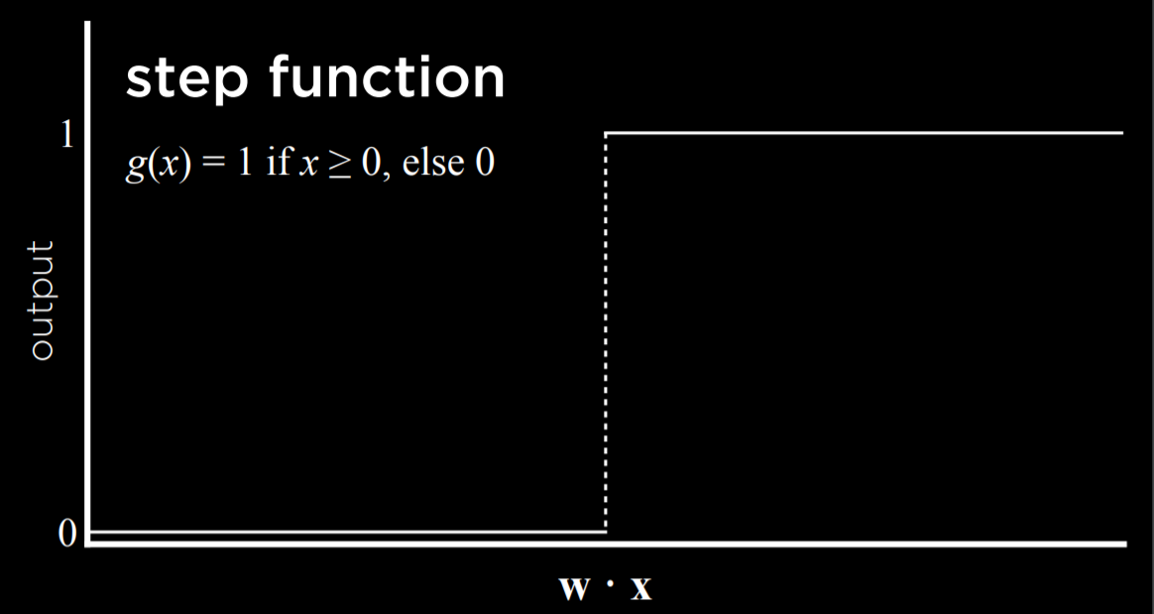
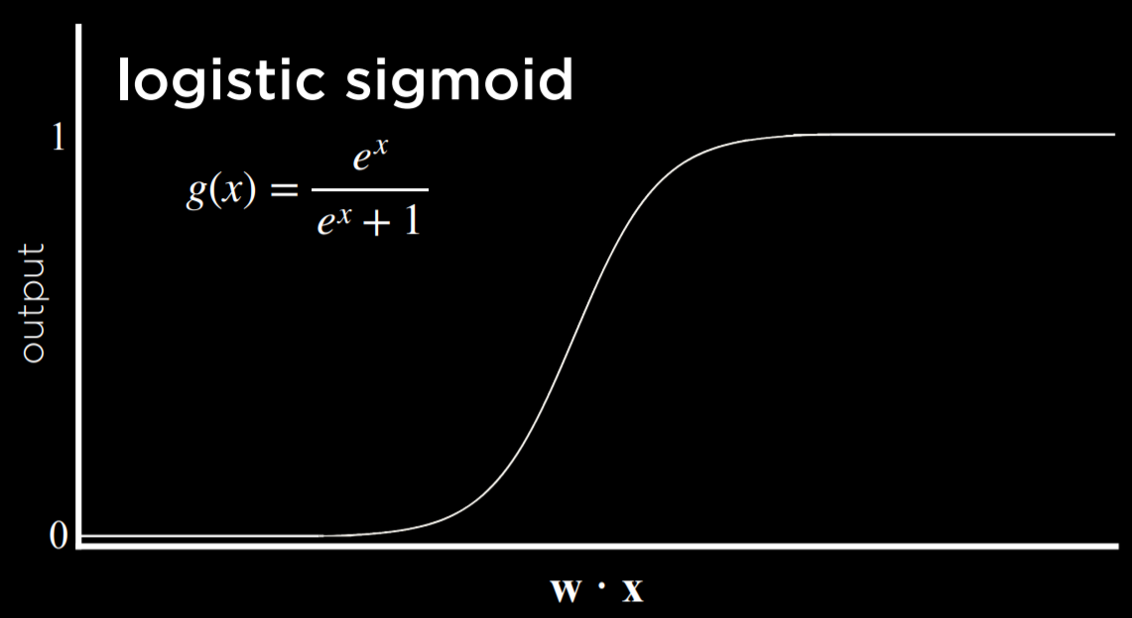
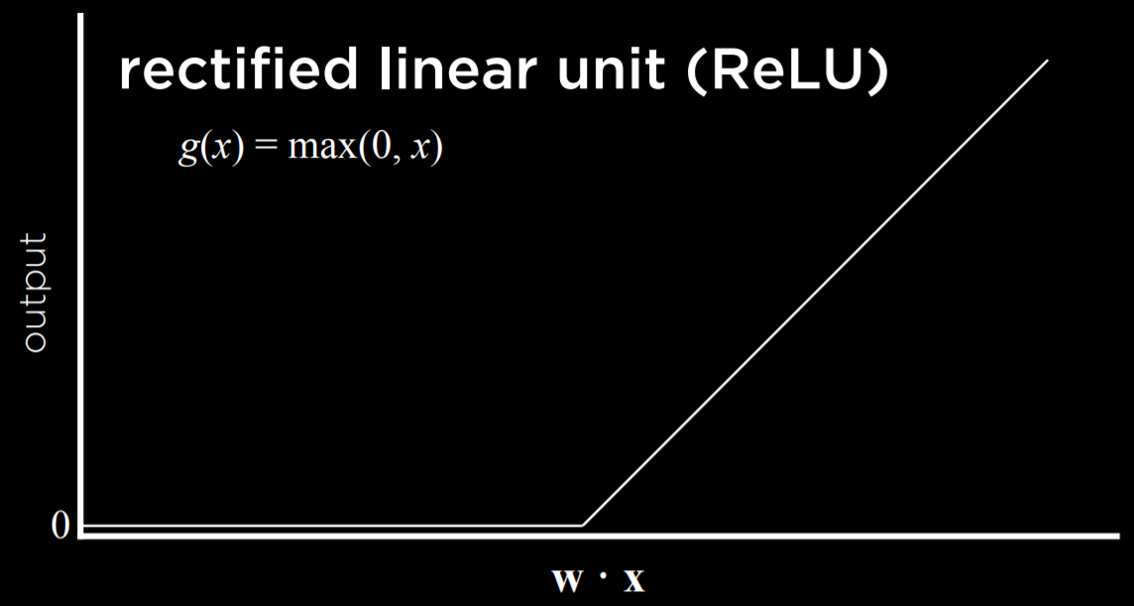
We have different activation function(the threshold for classification):
Neural Network Structure
Here h(x_{1},x_{2})=g(w_{0}+w_{1}x_{1}+w_{2}x_{2}) (g is a activation function) represents a simplest ANN:
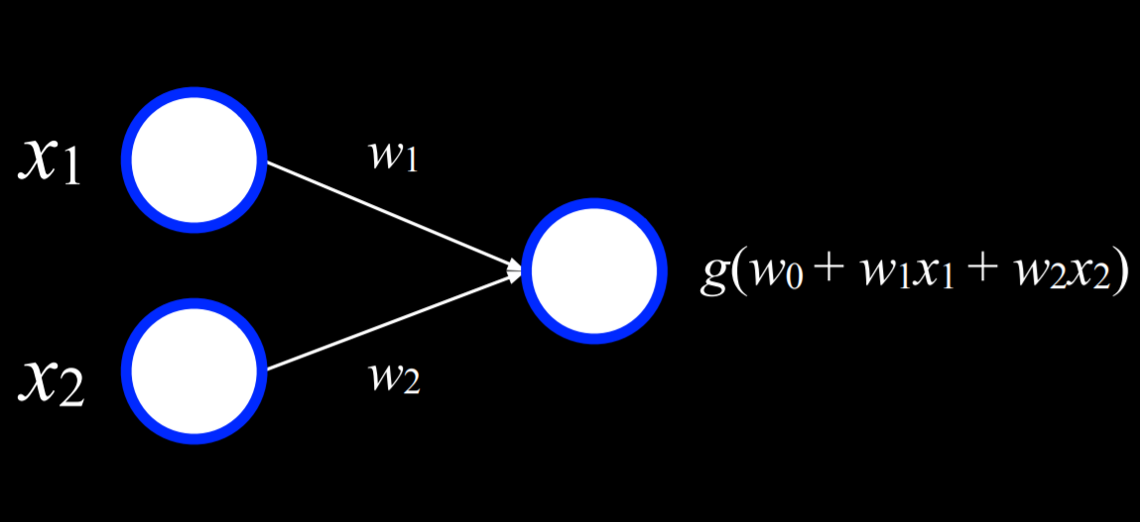
For example, we want to do an “or” function with this structure, we can set w_{0}=-1, w_{1}=1, w_{2}=1, and set g with the step function.
Using linear function we can handle multiple inputs: h=g\left(w_{0}+ \sum w_{i}x_{i} \right).
Gradient Descent
- Start with a random choice of weights.
- Keep doing:
- Calculate the gradient based on all data points: the gradient points toward increasing loss; update in the negative gradient direction.
- Update the weights based on the gradient.
Variants:
- Stochastic Gradient Descent: calculate the gradient only using one data point.
- Mini-Batch Gradient Descent: calculate the gradient using a small batch
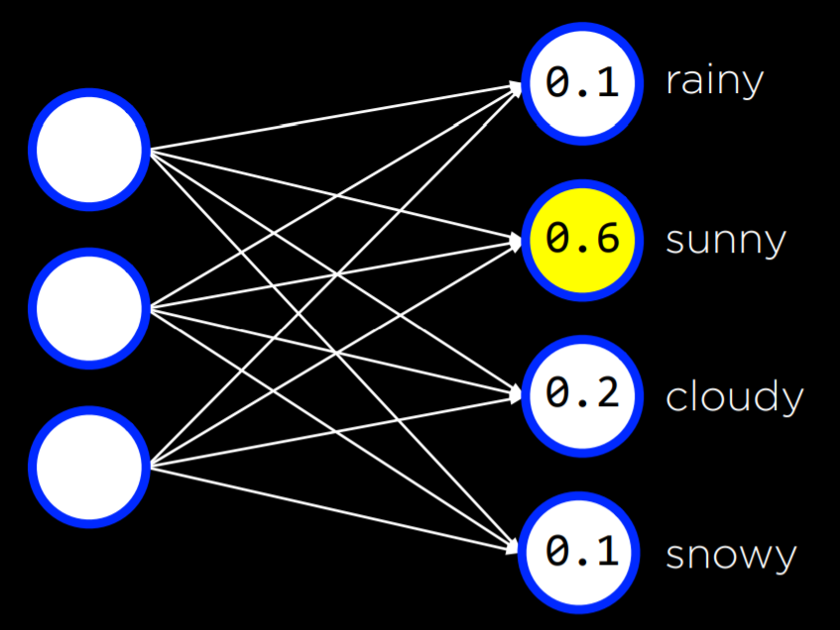
A case with multiple inputs and outputs: (multi-class classification)
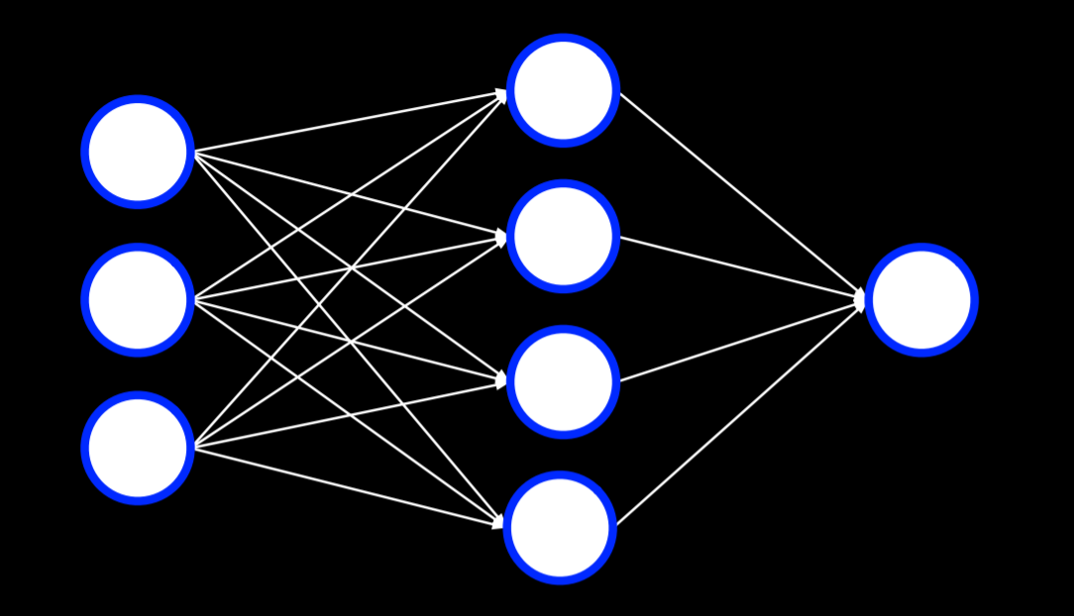
Multilayer Neural Networks
Backpropagation
To train a multilayer neural network:
- Start with a random choice of weight.
- Repeat:
- Calculate error for output layer.
- For each layer, starting with output layer, and moving inwards towards earliest hidden layer:
- Propagate error back one layer.
- Update the weights.
Deep Neural Networks
Neural networks with multiple hidden layers.
Deep learning.
Overfitting
More nodes/layers -> more accurate / more likely overfitting
Dropout: Temporarily removing units (randomly) from a neural network to avoid overfitting.
TensorFlow
A tool developed by google to play with neural networks.
Computer Vison
Recognize images.
We can use neural networks to do this.
A way is to use vectors (each pixel) to represent images.
Better way:
- Image Convolution: Applying a filter that adds each pixel value to its neighbors, weighted according to a kernel matrix.
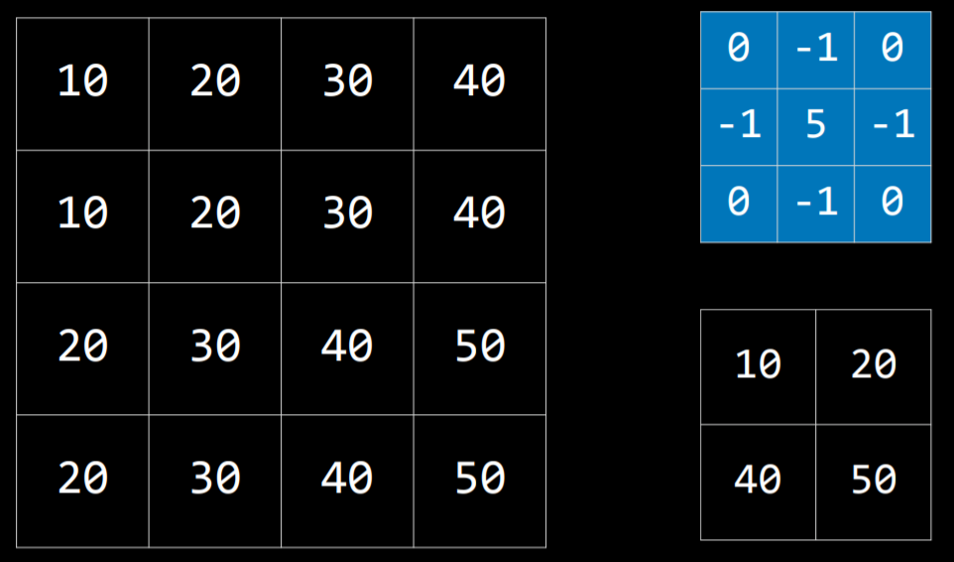
10=(10*0 + 20*(-1) + 30*0 + 10*(-1) + 20*5 + 30*(-1) + 20*0 + 30*(-1) + 40*0)
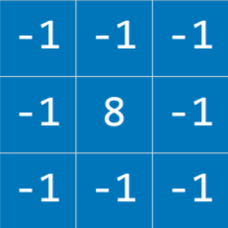
This matrix is often used to detect edges. (Same values leads to 0, larger if the central is different from neighbors)
Pooling: Reduce the size of an image by pooling some pixels together. A way is to use max-pooling (choose the maximum value within each local pooling window)
Convolutional Neural Network (CNN)
Neural networks that use convolution, usually for analyzing images.
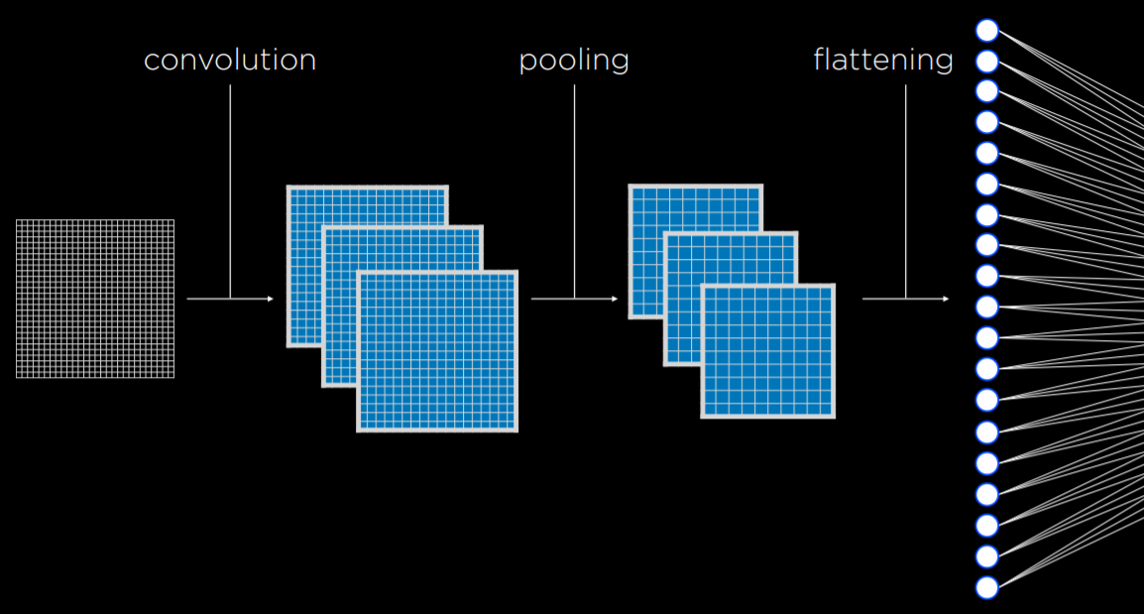
Input -> Network -> Output
Feed-Forward Neural Networks
Neural Network that has connections only in one direction.
Recurrent Neural Networks
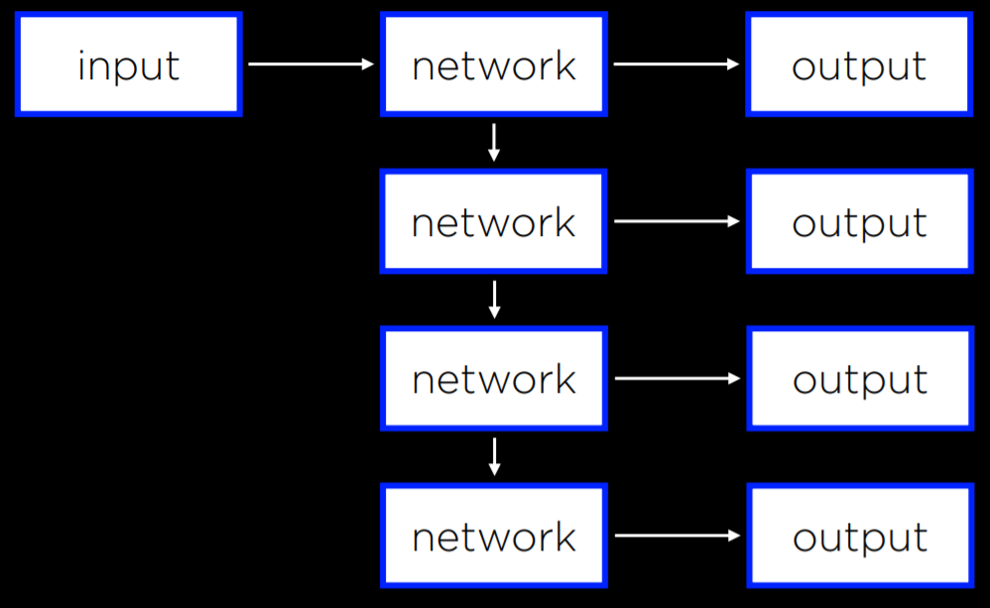
E.g. generate a sequence of words based on a picture.
Sometimes we can also use multiple inputs to learn from. (Another recurrent neural network) , e.g. learn from a sequence of words; translation.
One of the type: Long short-term memory neural network / LSTM