Week1
本页目录
Humans are biocultural organism.
Culture: “patterns of learned behaviour and ideas that humans acquire as members of a society, together with the artifacts and structures we create and use.”
- Culture knowledge
- Tool : survival; overcome biological and individual limitations; information
- Culture is Symbolic
- Linguistic anthropolog
Verbal communication
- Verbal language
- Non-word sounds with meaning
- Native speaker
- Communication is more than individual words
Non-verbal communication
- Writing, Morse code, Sign language, body language, facial expressions
- Difficult - time, past/future
Distinctiveness of Human language:
- Openness
- In different ways / infinite combinations / primate vocal communications
- Displacement
- Future, past / real or imagined events, non-existent objects
- Arbitrariness
- No link between sound and meaning
- Prevarication
- Can be nonsense, make statements that violate convention, can be false
- Duality of patterning
- Phonemes - small units of sounds; Morphemes - meaningful combination of phonemes ; Grammar
- Can be built (constructed languages) / conlangs
Humans equipped from birth for language
Sapir-Whorf hypothesis
▪ Aka linguistic relativity principle
▪ Language patterns influence thought patterns
▪ Language influences perception of reality
Symbol
Signs
- Sign (representations), object (what it refers to), interpreter
- Shared framework to receive the message
Ex. Inukshuk
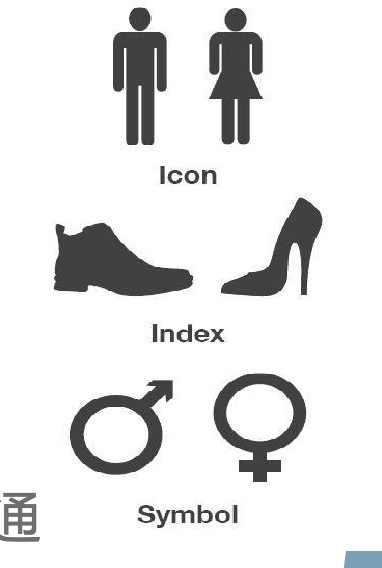
Peircian levels
- Icon - imitate and resemble
- Index - some physical link / causal relationship
- Symbol - Arbitrary relationship